AI Consulting · 2025 · Product Engineering · B2B
Transform Product Engineering Knowledge into AI Consultant Service
At KIT's Institute of Product Engineering (IPEK), I designed and shipped two Custom GPT consultants that distill decades of academic methodology into guided, actionable advice — adopted by 50+ students and positioned to scale as a lightweight consulting service for SMEs.
Product Definition
Distilling academic research into AI-driven consulting workflows
The product functions are based on two academic papers published by IPEK. My responsibility was to distill the key information from them, design workflows that enable AI to conduct a consulting-style conversation, and provide the AI with the institute's database to support analysis of the user's situation.
Project Challenges
Three constraints that shaped every decision
Extreme time pressure
Only a 100-hour contract to deliver 2 AI chatbot MVPs — from requirements through deployment.
Budget constraints
Extremely limited financial resources requiring smart technical choices to minimise development costs.
Technical debt
One of the PM consultant services had a legacy software "InnoFox" built in 2015 with poor usability and an outdated technology stack.
My Role
Sole delivery — from stakeholder interviews to user validation
There wasn't an official title for my role in the project, but I was the only person responsible for delivering the MVPs, reporting directly to Thomas Völk, a researcher at IPEK. My work covered everything from stakeholder interviews and technical architecture decisions to user validation.
Requirements analysis
Conducted interviews, analysed legacy consulting app, defined MVP scope, established roadmap.
AI workflow design
Designed overall AI architecture, conversation flow, LLM prompt strategy, and structured the method database.
Technical architecture
Researched tech stacks, created technical feasibility analysis, selected Custom GPT as solution, validated methods with supervisor.
Prototype & user testing
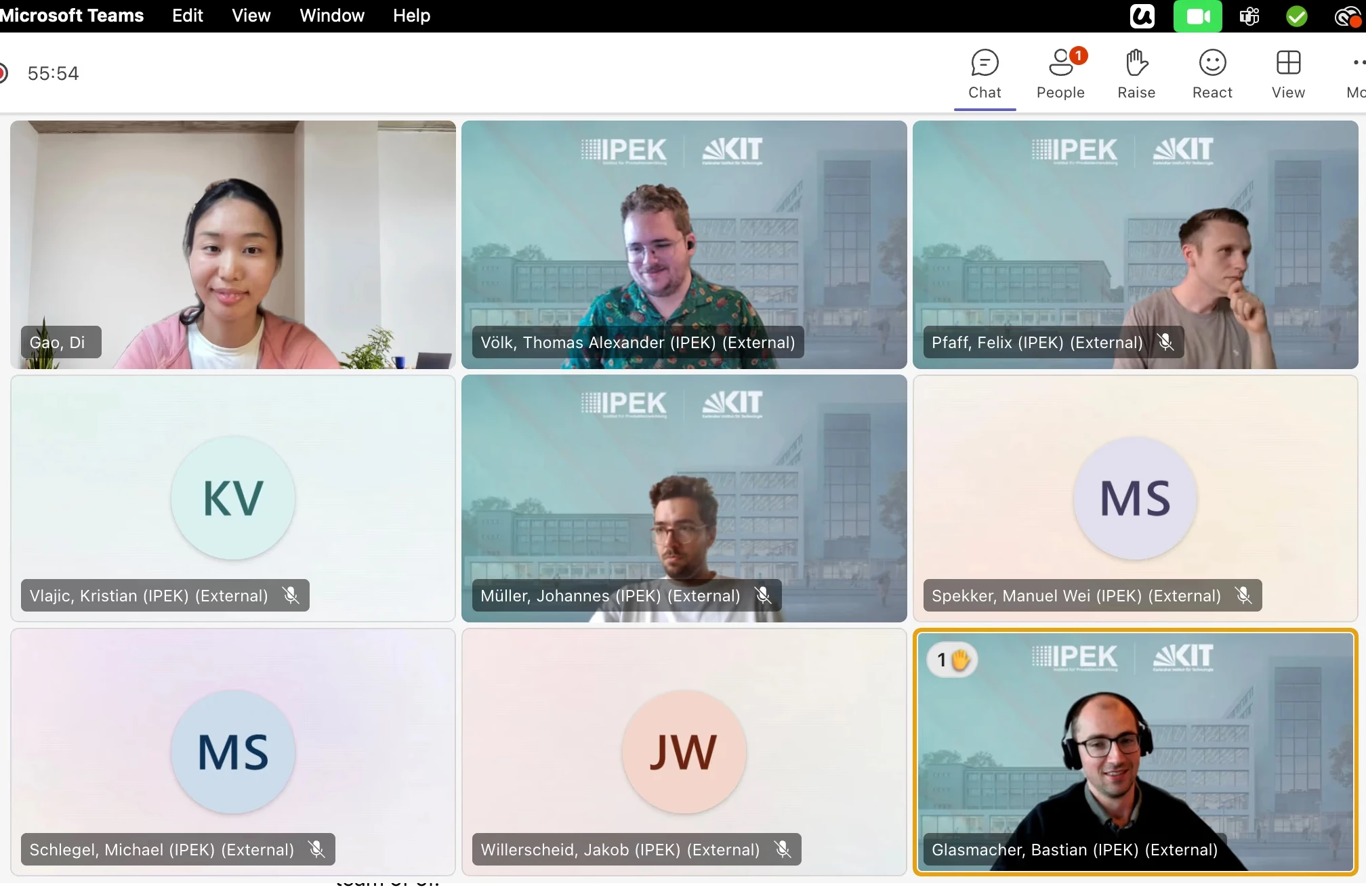
Conducted user testing with 7 product experts, collected structured feedback, analysed usage patterns.
MVP Tech Stack Research
The most critical decision: choosing the right architecture
Due to the extreme time pressure and budget constraints, the most critical decision was determining the technical architecture. I conducted comprehensive research comparing three approaches:
| Approach | Timeline | Monthly Cost | Pros | Cons |
|---|---|---|---|---|
| RAG with Python Backend | ~320 hours | $10–$50 | Full control, highly customisable | Significant technical risk, far exceeds time budget |
| n8n Workflow | ~180 hours | $29–$54 | Visual workflow design, faster than custom backend | Potential scalability concerns, still over budget |
| Custom GPT ✓ | Up to 60 hours | $0 | Rapid prototyping, no infrastructure needed, validate PMF fast | Less customisation vs. full RAG |
"Custom GPT was selected because it allowed delivery within the 100-hour contract, cost nothing for infrastructure, and could validate product-market fit rapidly — the constraints designed the solution."
Project Outcome
Two AI consultants — shipped and adopted
1. InnoFox Coach
InnoFox Coach is a smart online consultant that helps product development teams systematically choose the right engineering methods. Rooted in the iPeM (Integrated Product Engineering Model) and guided by the SPALTEN problem-solving framework, it evaluates a team's development goals, current phase, resources, and desired outcomes to recommend fitting, practical methods from a curated database.
2. Project Type Assessor
This AI advisor diagnoses a team's development style and project context, then maps it to a best-fit reference path to reduce inconsistency risks in engineering workflows. It targets variability in process models, documentation discipline, risk management, and tool support that commonly lead to cross-view inconsistencies in product development.
Expert Feedback
Strong method recommendations, calibrated for non-experts
PM experts agreed that InnoFox GPT delivers strong, relevant method recommendations. However, the chat provides more explanations and steps than experts need — which is expected, because the product is intentionally designed for non-experts in management.
Reflection
AI consulting is requirements work, not prompt engineering
The most valuable part of this project wasn't the technical build — it was the upfront scoping. Clients who come asking for "an AI tool" often don't know yet what problem they need solved, in what form, at what fidelity. Getting that clear before touching any tooling is what separates a deployed solution from an abandoned prototype.
This project confirmed a pattern I now apply to all AI consulting: spend more time on workflow mapping than on tool configuration. The tool is cheap to build. Understanding where it fits is the hard part.